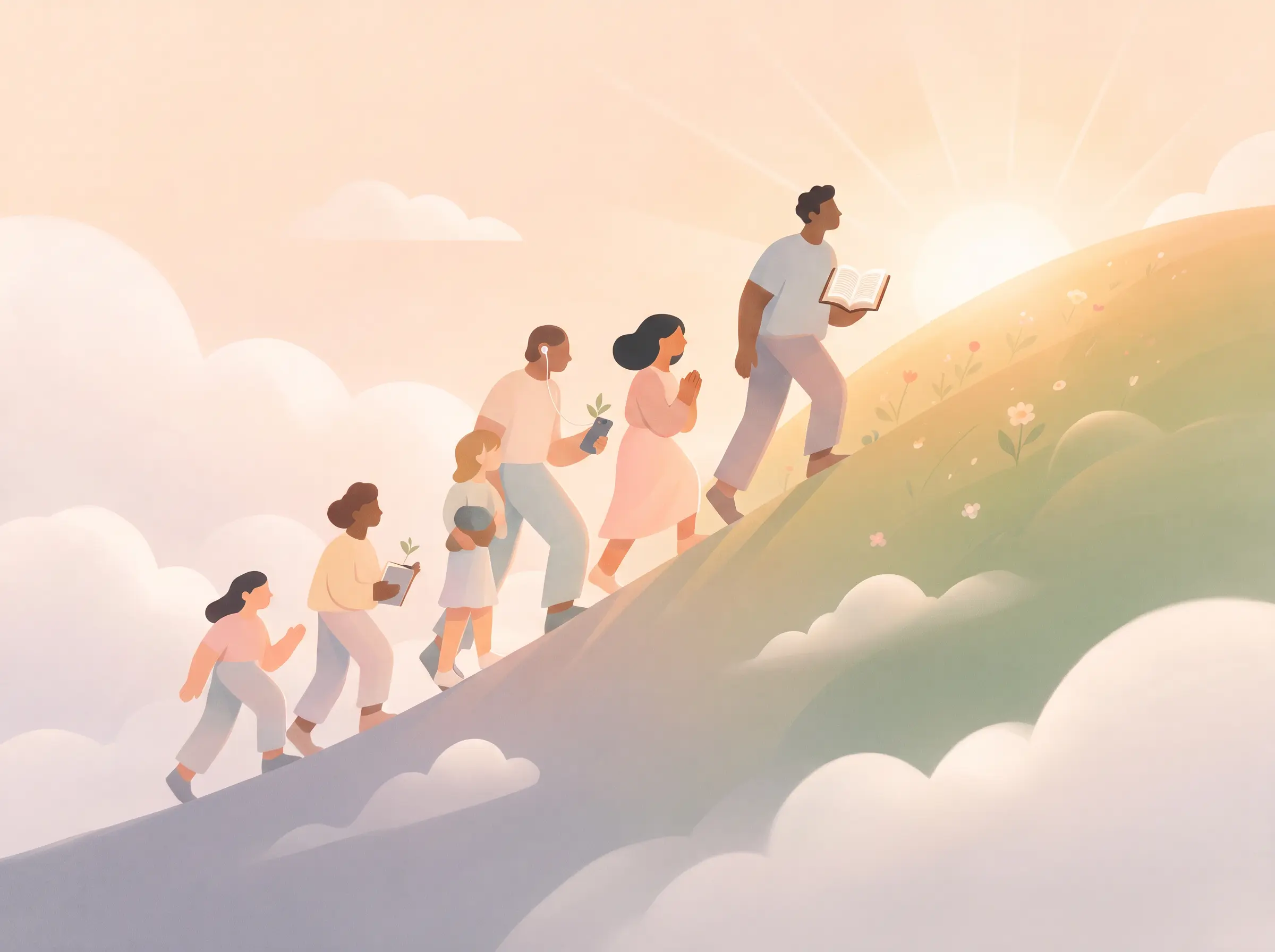
There are seasons when heaven feels slow. We pray, yet the silence lingers. We hope, yet the door does not move. Every believer knows this ache — and Scripture does not minimize it. Instead, it reframes it.
God’s delays are not neglect. They are holy invitations to be formed. Waiting is one of God’s oldest tools for shaping the soul, a classroom where trust matures, and desire is purified.
Waiting as God’s Ancient Pattern
In the biblical story, waiting is never an empty hallway before life begins again. It is one of God’s primary environments for transformation. While we rush toward outcomes, God patiently develops character, depth, and resilience within us.
- Abraham waited decades for the promise (Genesis 12–21), learning to trust God beyond visible progress.
- Israel waited centuries for deliverance from Egypt, discovering God as Sustainer, not just Rescuer.
- David waited years after being anointed king (1 Samuel 16–2 Samuel 5), growing into the kind of king he needed to become.
- The Church now waits for Christ’s return, learning active faithfulness in the in-between.
From beginning to end, God works slowly enough for our hearts actually to change.
But those who wait for the Lord shall renew their strength; they shall mount up with wings like eagles; they shall run and not be weary; they shall walk and not faint Isaiah 40:31
Waiting is not wasted time in Scripture; it is transformation time.
The Character of God in Delays
Understanding who God is changes how we wait. When timing feels confusing, character becomes the anchor.
1. God is patient and merciful
Before Scripture tells us what God does, it tells us who He is. God’s slowness is not hesitation but compassion — space for us to grow, return, and breathe.
You, Lord, are compassionate and gracious, slow to anger and abounding in love.
Psalm 86:15
His patience with us becomes the pattern for our own.
2. God stands outside time
We feel hours; God shapes ages. His timing always works toward eternal purposes that stretch beyond our immediate pain.
With the Lord, a day is like a thousand years…
2 Peter 3:8
He is never late — only working on a different scale.
3. God protects us through timing
Sometimes God delays because our hearts are not ready for what we’re asking. Delay becomes mercy, not distance.
Israel could not enter the land immediately; their trust was unformed.
Jesus told His disciples:
I have much more to say to you, more than you can bear now.
John 16:12
A “yes” given too early becomes a burden, not a blessing.
4. God is relational, not transactional
God is not a vending machine for quick answers; He is a Father drawing us close. Delays shift our prayers from “Give me” to “Be with me,” reshaping desire through communion rather than demand.
Waiting teaches us to seek God Himself, not only His gifts.
Waiting Builds the Virtues God Values Most
God delays answers to grow what quick answers never could.
1. Patience — Abraham
Abraham followed God with nothing but a promise. His story teaches us that patience is not passive — it is trusting God’s timeline over our own urgency. Slow seasons stretch the soul to rely on faith, not sight.
2. Humility — David
David had the promise of the throne but refused to grasp it by force. Humility grows when we surrender control and allow God to lift us rather than lifting ourselves. Waiting strips pride and anchors us in dependence.
3. Perseverance — Hannah
Hannah returned to the house of the Lord “year after year” (1 Samuel 1:7). Perseverance is forged in repeated prayer, steady faith, and long obedience.
4. Hope — the early Church
Early believers lived fully while longing for Christ’s return. Hope is active endurance — a way of seeing the world through God’s future. Waiting nurtures the kind of hope that remains steady through uncertainty.
A delayed answer is often God’s way of shaping the heart that will receive it well.
Try this today: take one unanswered prayer and turn it into an invitation, not for God to move faster, but for God to form you more deeply.